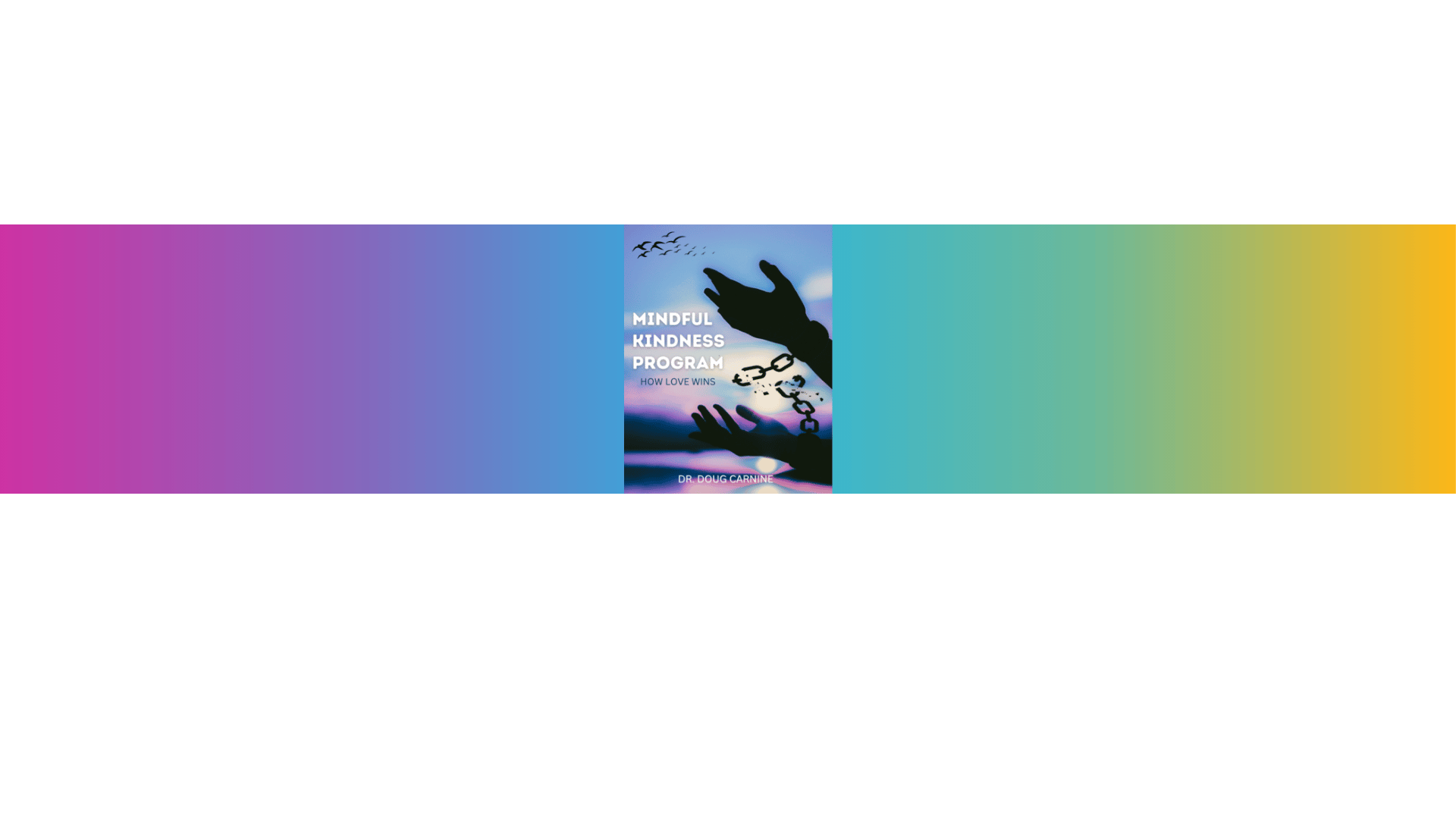
Mindful Kindness Program: How Love Wins
From a Book Born in Crisis to a Program for Transformation
It is the end of June, 2020. The pandemic has crippled the world, and for the last several days, racial uprisings have been taking place around the world — especially in the US. This seems like the least likely time to be writing about How Love Wins. But it is exactly this kind of moment that reveals the choice in front of all of us: we will choose, intentionally or not, to lean into love and kindness, or fall into fear, anxiety, helplessness, and anger.
How Love Wins is about the "whys" and "hows" of leaning into love and kindness — simple to understand, but challenging to do. It asks readers to:
- Live a happy, healthy, and meaningful life through close, caring relationships.
- Use mindfulness and meditation to break unkind habits and build kind ones.
- Develop kind habits for the benefit of self and others — through being friendly, offering help, showing appreciation, and reaching out to those in need.
Be kind. It sounds simple, so why is it so difficult? Most of us recognize that being kinder and more present would improve not only our own lives and the lives of our loved ones, but also our communities and our world. Numerous scientific studies confirm that living mindfully and treating others with kindness offer real benefits — stronger relationships, greater wellbeing, even longer life. Yet even when we truly care and want to change, old habits pull us back into the same self-centered cycle.
With How Love Wins, Buddhist educator Doug Carnine offers another path: a 12-step process of transformation and a toolbox of practical skills anyone can use to live more fully in the moment and treat themselves and others with greater kindness. A lay Buddhist minister who has worked with hospice patients and prisoners, Carnine's central conviction is that everyone is capable of building a mindfully kind life — and making it stick.
Becoming a Program
That conviction is what led the KINDR Foundation, together with Kindful Restoration, to take How Love Wins and adapt it into something larger: a model to meet a simple but urgent need — prison environments that actually support recovery, rehabilitation, and lasting change.
The model and coursework were developed and field-tested by Ernesto, alongside the KINDR Foundation, prior to his release from prison in 2023. Kindful Restoration was subsequently founded by Ernesto and Kathleen Rodriguez, in partnership with the KINDR Foundation, to carry the work forward. Since 2023, KINDR has received a grant from the California Department of Corrections and Rehabilitation (CDCR) to implement the model in five additional state prisons, with Kindful Restoration leading that implementation.
A Two-Level Model: Macro and Micro
Rather than leaving rehabilitation to chance, the Mindful Kindness Program works on two levels at once, bringing facility leadership and incarcerated individuals together as partners in change.
At the macro level, the model helps prison administrators identify and deliver programs that genuinely enrich incarcerated individuals' lives and meet their rehabilitative needs. The stakes are real: building this kind of collaborative culture can support more successful reentry, lower recidivism, and result in fewer infractions during incarceration — while also easing job-related stress for staff and correctional officers. Central to this level is a Peer Mentoring Program, which trains incarcerated individuals to become positive peer leaders: a cadre who work alongside facility staff to promote a safe environment, model kindness, deliver evidence-based rehabilitative programming, and mentor fellow Adults in Custody (AICs).
At the micro level, the model delivers four educational and experiential programs designed to reinforce recovery and give individuals a concrete path to positive change:
- Mindful Kindness Program: How Love Wins
- Intimate Partner Violence: Awareness and Prevention
- INSIGHT: Exploring Negative Choices, Lifestyles and Behaviors
- Electronic Contraband
Upon completing these four courses, an AIC can elect to go further — completing the Peer Mentoring Program and earning a Peer Mentor Support Certification offered through the State of California, which provides a viable employment path post-incarceration.
Vison and Mission
Vision: To bring hope to every adult in custody by providing them with the skills to embrace a mindset of kindness toward themselves and others. As participants learn positive, reinforcing behaviors, their desires, thoughts, words, and actions become more thoughtful and caring — of others and of themselves. They become individuals who lift, serve, and encourage others to become more kind.
Mission:
- To model the Peer Mentoring Program's values and encourage all Adults in Custody — regardless of race, creed, color, age, national origin, ancestry, gender, marital status, disability, religious or political affiliation, and/or sexual orientation (Title 15 §3234, CA) — to adopt a positive attitude toward staff supervision.
- To provide peer mentoring to new AICs arriving at a facility, successfully introducing them to and helping them understand the program's vision.
- To encourage a culture of recovery, rehabilitation, and change for both current AICs and newly incarcerated individuals.
More broadly, KINDR Foundation and Kindful Restoration share one goal: helping incarcerated people build lives rooted in mindful kindness, meditation, healthy relationships, and personal resilience — with the ultimate aim of bringing this program to inmates across all 50 states and the U.S. Insular Areas (Puerto Rico, the U.S. Virgin Islands, Guam, and American Samoa).
How the Program Works
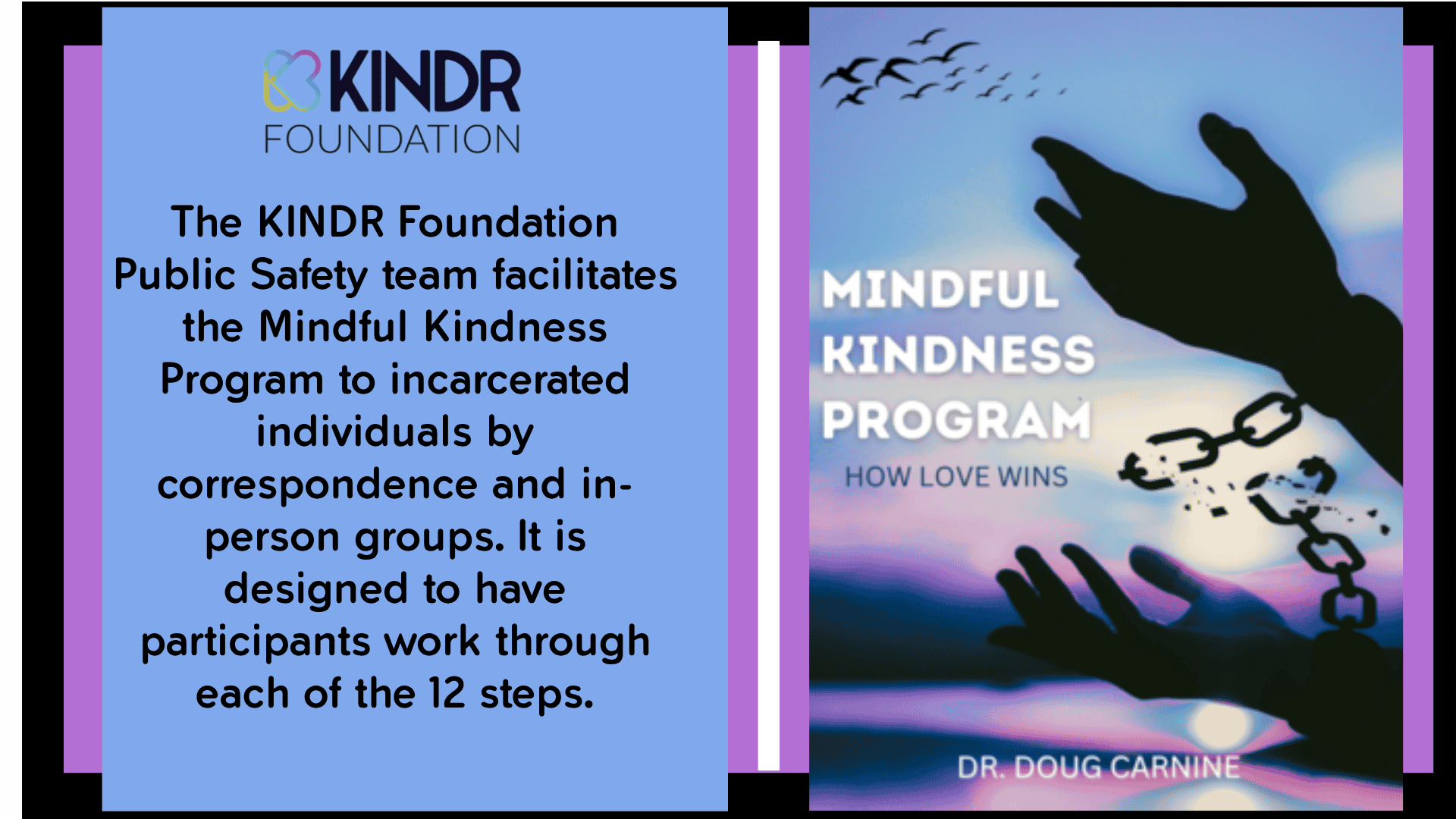
The Mindful Kindness Program (MKP) is a 12-step course built around How Love Wins, adapted with examples and scenarios incarcerated participants can recognize from their own lives, so that the work of building kindness and breaking unkind habits actually sticks.
The coursework is offered in two formats:
In-person, facilitated groups, led by Kindful Restoration staff and by inmates themselves — Peer Mentor Leaders (PMLs) who've completed the program and stepped up to lead it for others — traditionally run 28 weeks (about six and a half months), with a two-hour class each week, for 56 hours of total class time. Week one is orientation; week 28 is graduation. Each of the book's 12 steps receives two weeks of focused instruction: one week for facilitator-led discussion and written exercises, and one for the group to personalize and internalize what they've learned, often through visual aids, modeling, and role-play.
Correspondence courses were built to extend the program's reach further within the prison system. They don't offer the same real-time discussion and feedback as in-person groups, but have proven effective and necessary. Because prison mail moves slowly, course completion averages 16 months.
Participants who complete the program can go further still: taking a vow of kindness, applying to become a Peer Mentor Leader, and documenting their growth through concrete acts of kindness while incarcerated. PMLs then help facilitate in-person groups and mentor the next round of participants — extending the program's reach well beyond what Kindful Restoration staff could accomplish alone.
Impact So Far
Over the past five years, KINDR Foundation has brought the Mindful Kindness Program to inmates in more than 30 institutions across the California correctional system.
In-person groups were initially limited by COVID-19 to four California institutions, where 78 inmates completed the program. In 2023, CDCR funded a grant for KINDR and Kindful Restoration to replicate the model in five additional California prisons. Meanwhile, correspondence course completions represent almost all 34 correctional institutions in California.
Together, these two formats have directly touched the lives of thousands of inmates and their families. The impact reaches further than the walls of any institution: kindful people released back into their communities keep making living amends and become productive members of society — which is how the program's mission also becomes a public safety mission.
Looking ahead, during 2026 KINDR is working to further expand the program's reach through the EDOVO Platform, a non-profit, tablet-based program that offers free coursework to a million prisoners across more than 40 states.
The Results
MKP participants complete a 51-item survey at the start and end of the course, and the results speak for themselves: 39 of the 51 items showed a statistically significant shift — every one of them in the right direction.
Both formats work. Inmates in the correspondence course showed significant positive change on 35 of 51 items, covering life satisfaction, stress, relationship health, mental wellbeing, behavior control, and mindfulness. Full evaluation reports are available on the Resouces tab under KINDR Prisons.


Related Causes
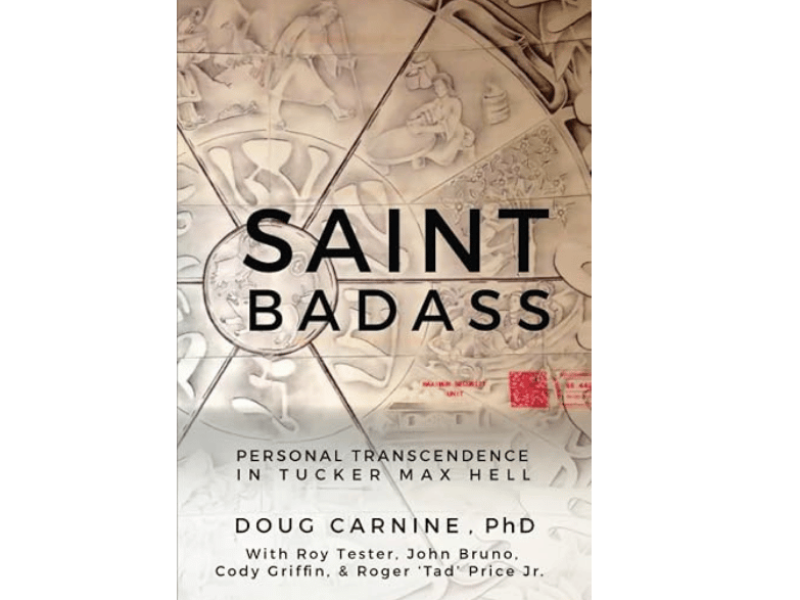
Saint Badass: The Story of the Cover Art...
Roy Tester, inmate and co-author, with Doug Carnine created the cover art for the book Saint Badass: Personal Transcendence in Tucker Mall Hell. Without artist supplies, using 8 envelopes and determin... (Click to Read More)

Reflections by Black Youth on Lasting Happiness for Teens...
After completing our Lasting Happiness: Guide for Teens & Young Adults program, the students and facilitators reflect on what they learned about kindness and the effect it has had on their life.... (Click to Read More)

Spreading Kindness Campaign...
Help us make Eugene and Springfield Cities of Kindness in Oregon... (Click to Read More)
The Book: Saint Badass: Personal Transformation in Tucker Max Hell...
This isn't Doug's story about four men. It's their story, in their own words. Saint Badass was written by Doug and the four men as co-authors — the product of years of correspondence ... (Click to Read More)
Ernesto's Story: Second Chances...
My name is Ernesto Rodriguez. I was a prisoner in California serving a 37-year sentence for crimes I committed at 18 years old. I was incarcerated for 24 years before my release in 2023.... (Click to Read More)

A KINDR Way to Reduce Recidivism...
KINDR Prisons is a program that helps adults in custody to break through self-deprecating thoughts and become catalysts for kindness. Inner transformation is the key to self-forgiveness, the forgi... (Click to Read More)